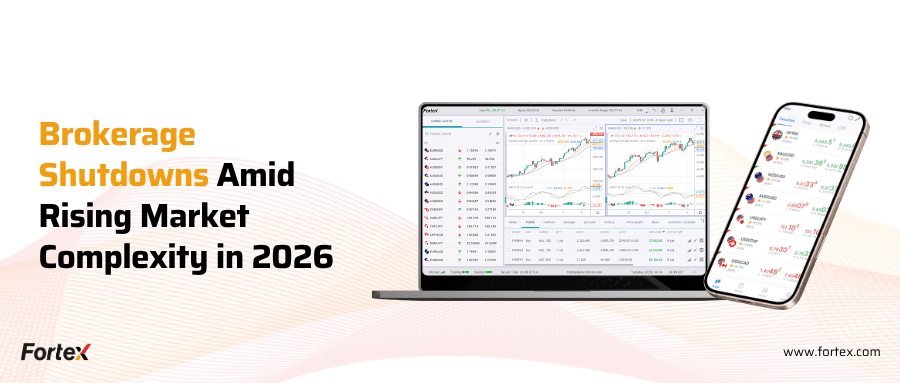
The first half of 2026 highlighted persistent market instability. Gold volatility, liquidity disruptions, and geopolitical tensions contributed to multiple brokerage closures, while even some new businesses from large brokerages exited the market. The takeaway: client acquisition alone is not enough.
What we've observed behind brokerage failures:
- B-book exposure breaching risk limits during sharp market moves
- Liquidity drying up when hedging demand spiked
- Manual risk processes reacting too slowly
- Compliance pressures exposing fragmented operations
These issues share a common root cause: execution, liquidity, and risk functions often operate in silos. When markets accelerate, that fragmentation turns into operational risk.
How Fortex 7 addresses these gaps:
- Unified trading, liquidity, and risk management in one platform
- Real-time exposure monitoring with automated risk controls
- Scalable infrastructure designed for volatile market conditions
- Flexible liquidity connectivity and execution tools aligned with regulatory and growth needs
The Conclusion: Most brokers don’t fail due to lack of clients, but due to insufficient operational resilience under volatility and regulatory pressure.
Talk to our team about to discuss how to reduce risk and build a more sustainable brokerage business to prepare for future market volatility in the 2nd half of 2026.
About Fortex
Founded in 1997, Fortex Technologies has been at the forefront of revolutionizing trading experiences with its robust, neutral, multi-asset trading platform. Our platform's stellar features, including the Fortex 7 Trading Platform, ECN Solution, Liquidity Hub, Infrastructure hosting, and more, are trusted globally by regional banks, hedge funds, asset managers, broker-dealers, and professional traders. It's time to upgrade your liquidity access, refine your execution workflows, and support sophisticated trading strategies with Fortex.
To Learn more about our products, contact us here.